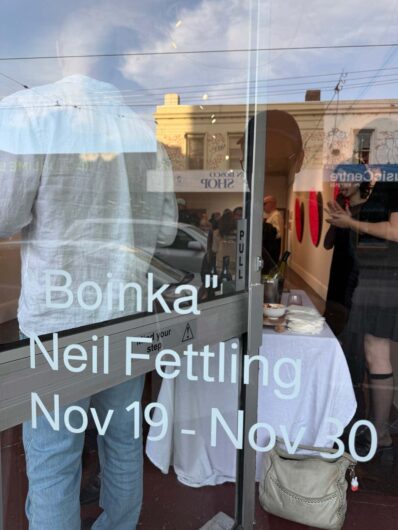
Boinka
Statement
As an artist, I straddle the relationship between nature and post-nature worlds. In the first instance, emulating and re-creating in paint the cycles of wind, rain and weathering on the landscape, then integrating the added catharsis of human impact. This impact has been defined in Latin as, Altera natura or second/artificial nature.
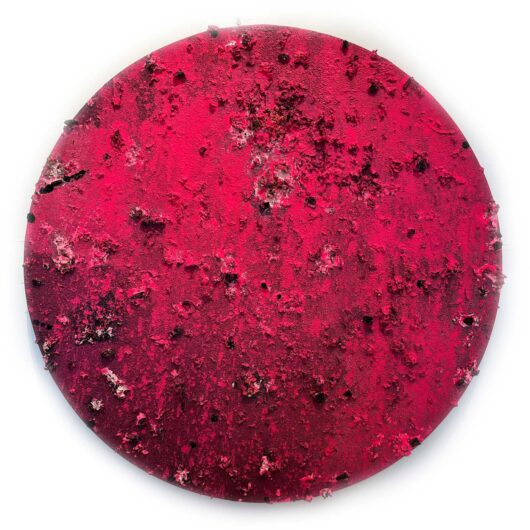
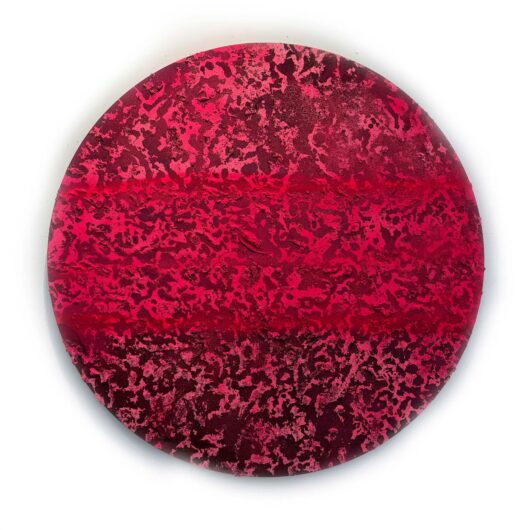
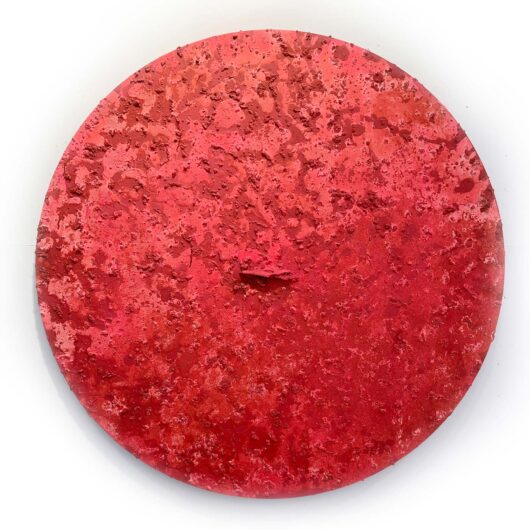
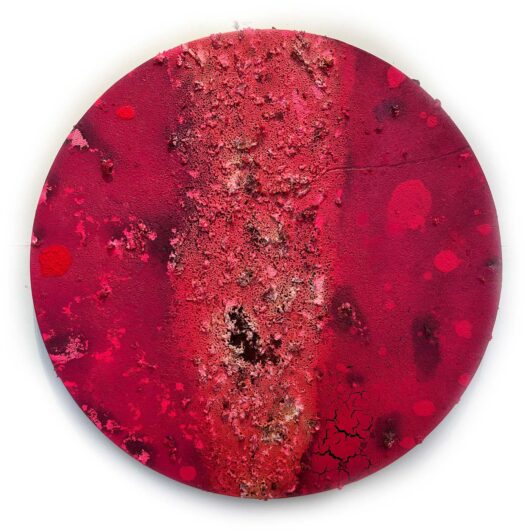
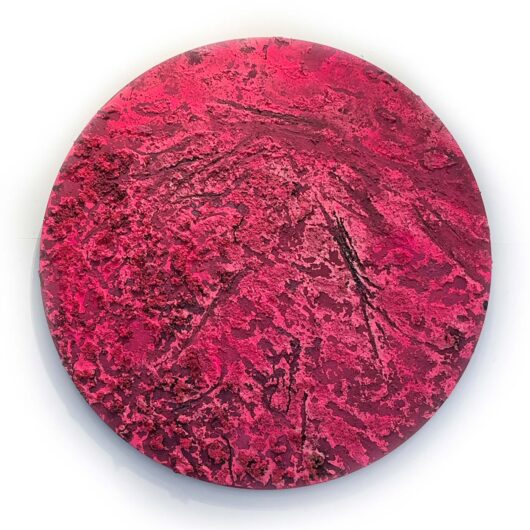
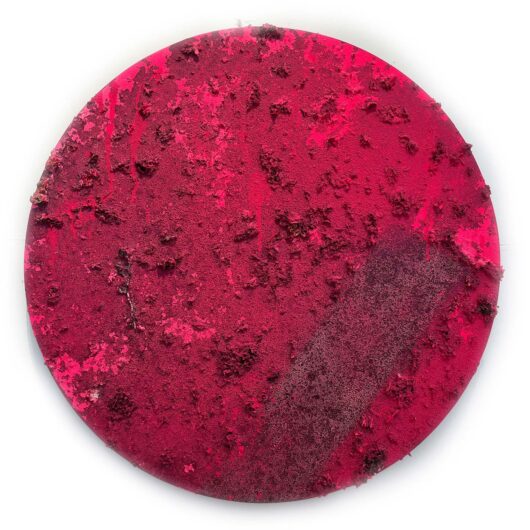
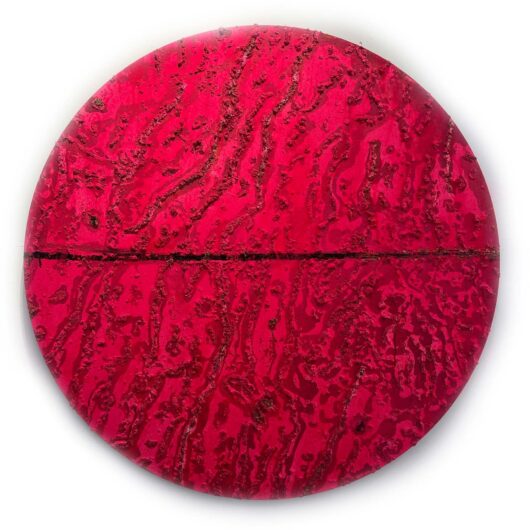
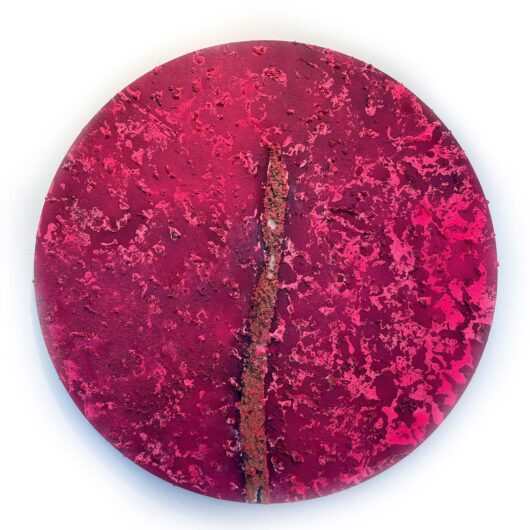
In one respect, this new series of works continues an ongoing investigation into the Mallee in Northwest Victoria and its ecological sustainability, viewed through the region’s boinkas (saltpan or shallow groundwater depressions) that occasionally brim with salty water, ’but generally [are] dry and glittered with salt rime and edged with gypsum shards and muddy sand’ (Carter, 2010.)
The boinkas are largely the result of remnant surfical salt crusting from an ancient inland sea, but more recent clearing of adapted indigenous flora, (Eucalyptus Dumosa, pines and casuarinas, heath, saltbush and spinifex), for dryland cropping and irrigated horticulture, have seen these ubiquitous environments undergo further stress.
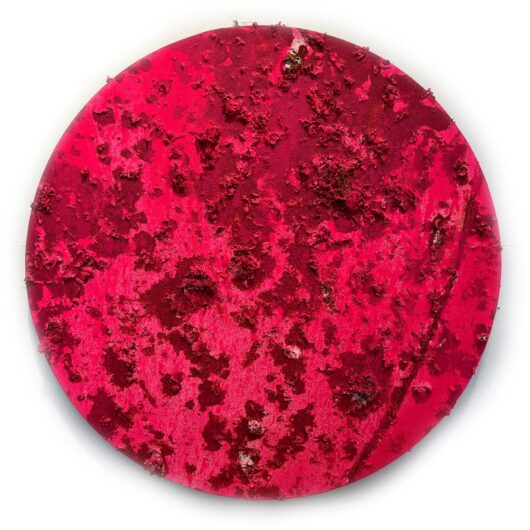
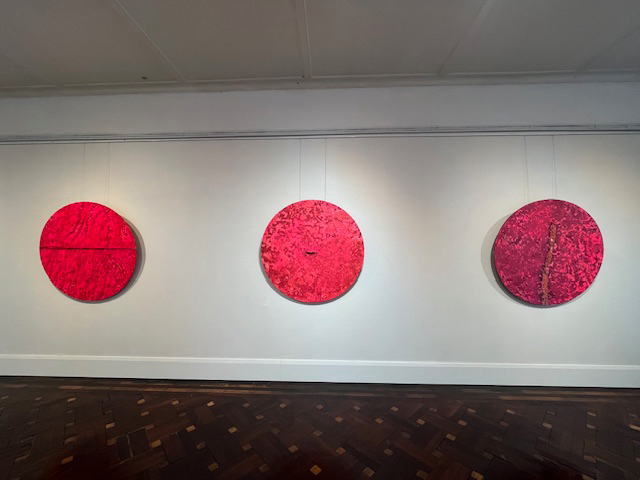
This high salinity combined with algae and halo bacteria produces pink or red carotenoids giving the lakes their characteristic pink colour.
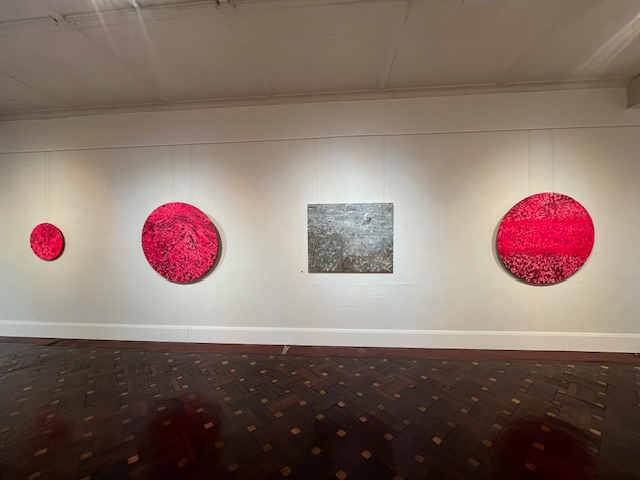
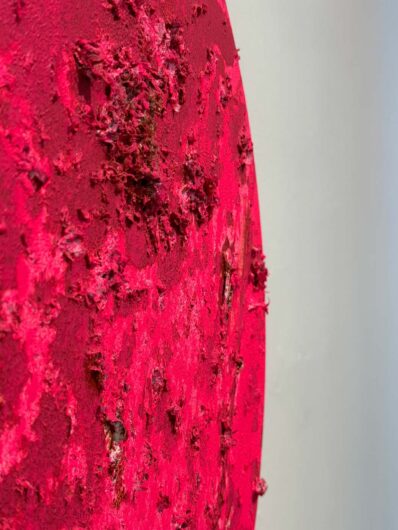
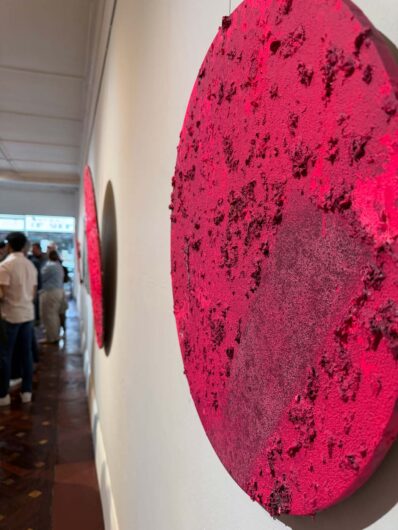
Avoiding all literal interpretation, these works reveal the earth’s skin and biota and the cycles of inscribed human impact in conjunction with the scars inflicted by the forces of nature itself. All references to life-sustaining water, however oblique, are gone and the primal geological mud has turned to environmental and apocalyptic sludge. The scarified surfaces are etched and incised, wounds that seep from fissures beneath the skin or just openly bleed. In these works we are reminded of the remnants (either human, animal or vegetable) of life in our threatened natural world.
Of no less importance, these circular works suggest other multifarious interpretations beyond the bionka, related to the cycles of life through to atrophy. Just like the natural world, the human body is subject to change, either via growth or malignancy. As a living organism over a lifetime our bodies increasingly reflect the environmental ravages wrought on them, for example, in the aging process, disease, breakages, tears, cuts and ruptures, organ failure, and psychological decline.
Categorised in: All works, In footer
This post was written by Alex Fettling