here’s mud in your eye
Statement
The exact source and meaning of the above expression is unclear. Some refer to its ironical association of bestowing, ‘good luck’ or ‘best wishes’. A more nuanced view is that it is not a toast to another, but a reference to the self – ‘l hope l beat you’. This seems to relate to the muddy track in a horse race where the leading horse flicks mud into the eyes of the followers. Its origin may even relate to WW1 soldiers in the muddy trenches of the Western Front or even back to the bible where Jesus heals a blind man with mud.
Mud, the commonest of material has provided nearly all of life on earth. Geologists love mud; describing it as both an end (the end of the cycle of erosion) and a beginning (changes to sedimentary burial and diagenesis).
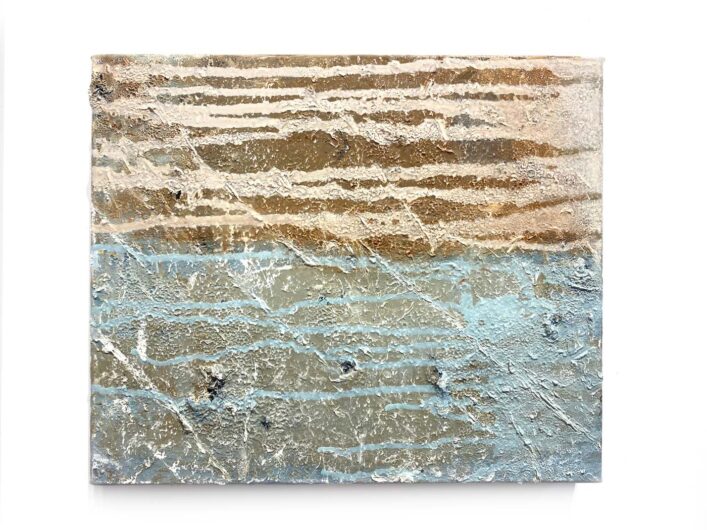
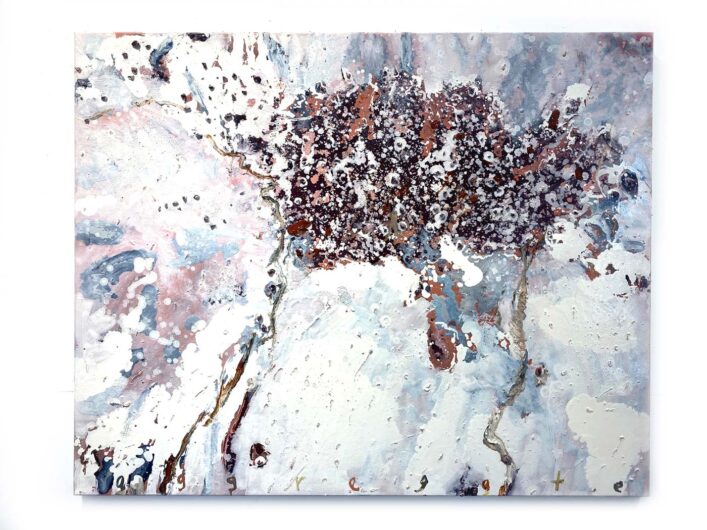
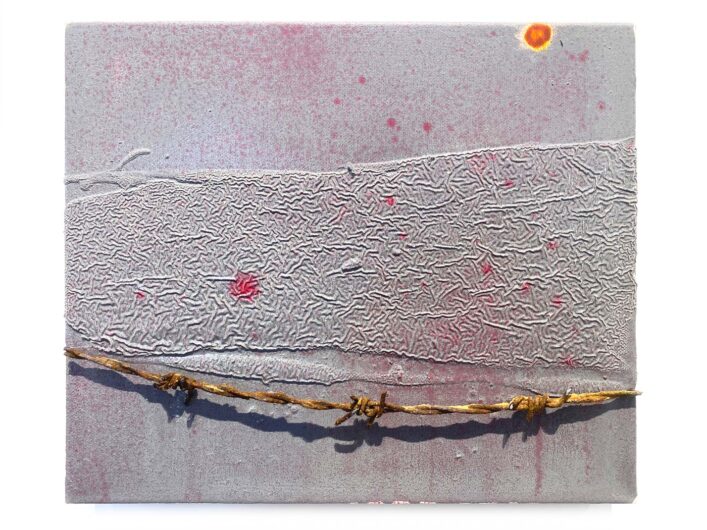
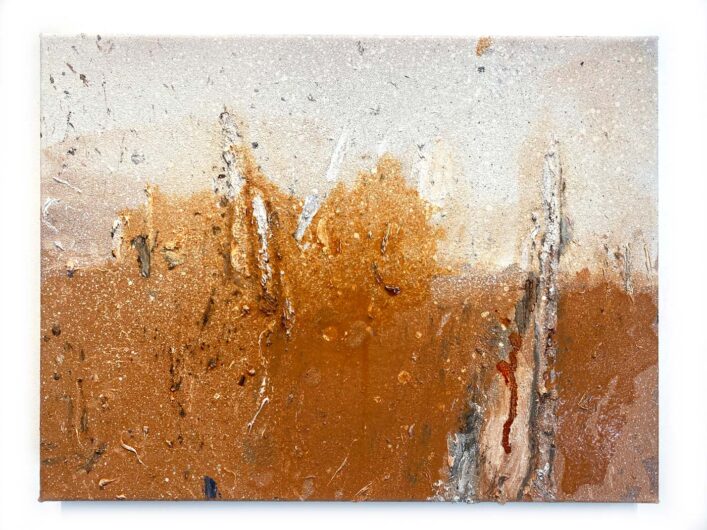
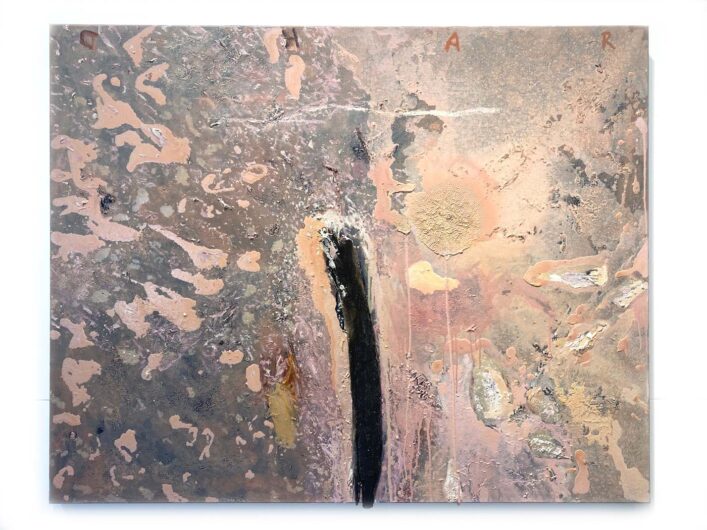
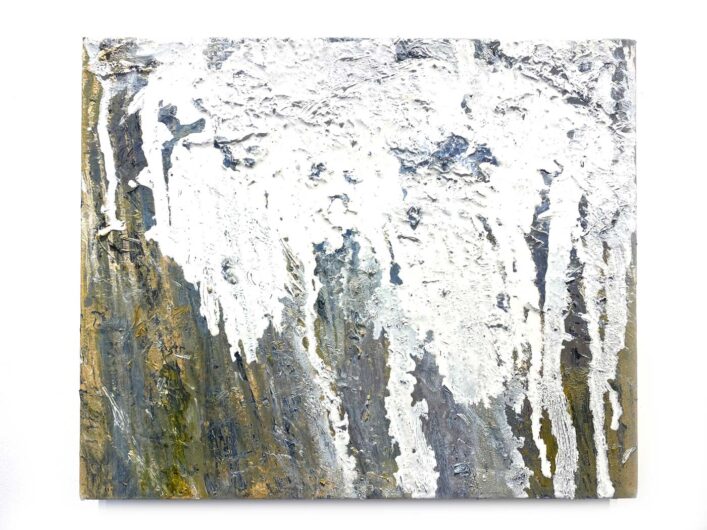
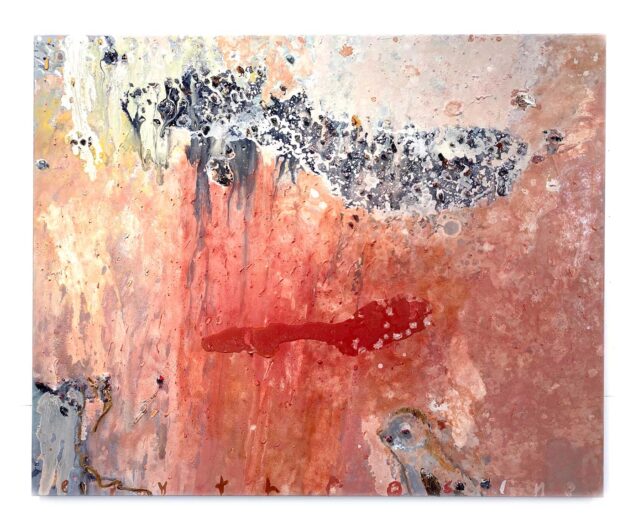
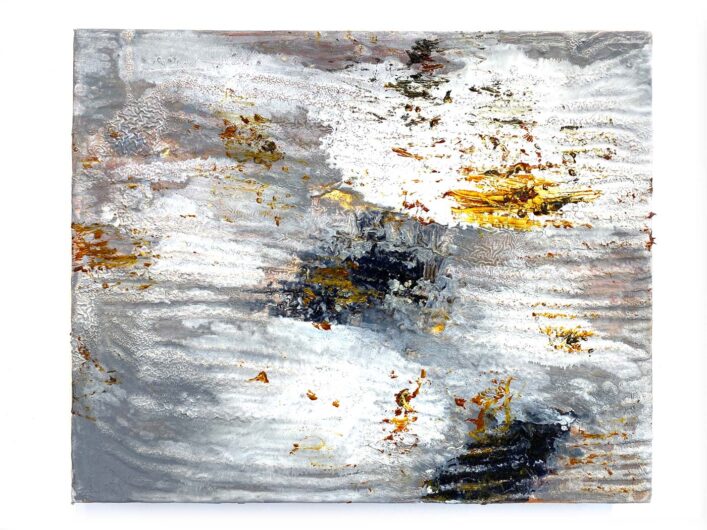
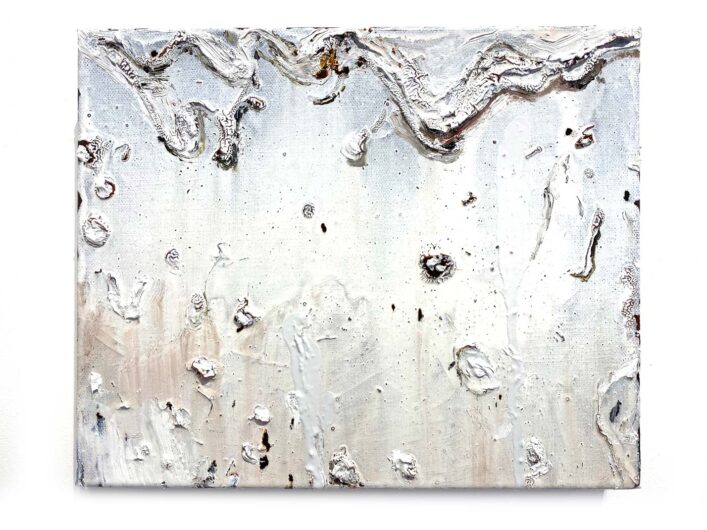
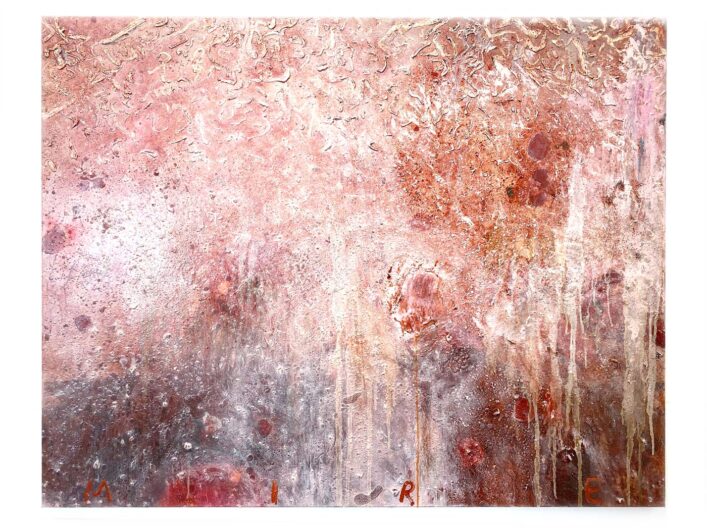
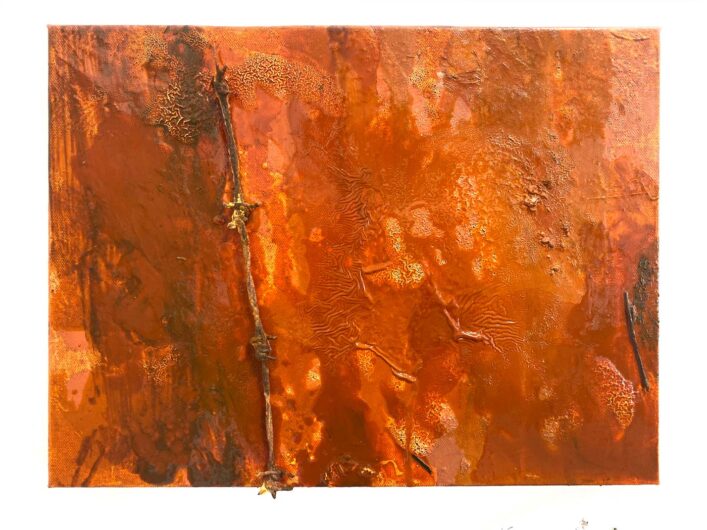
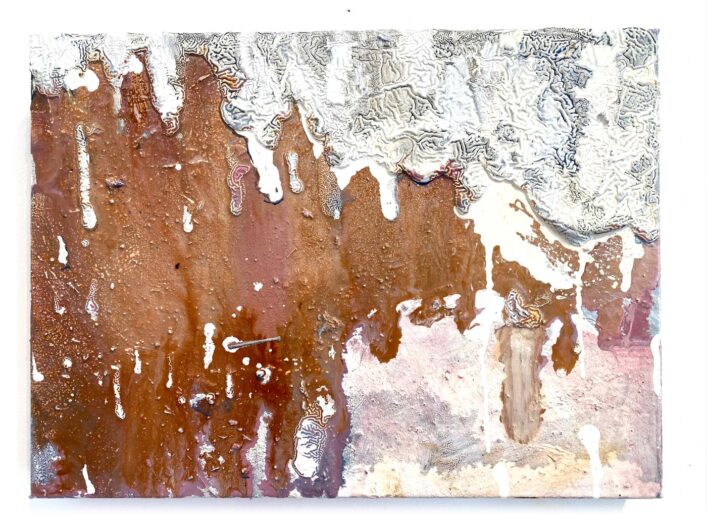
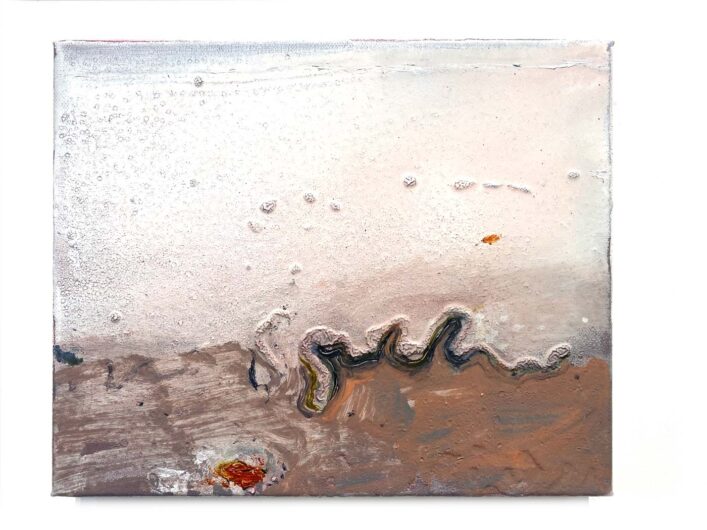
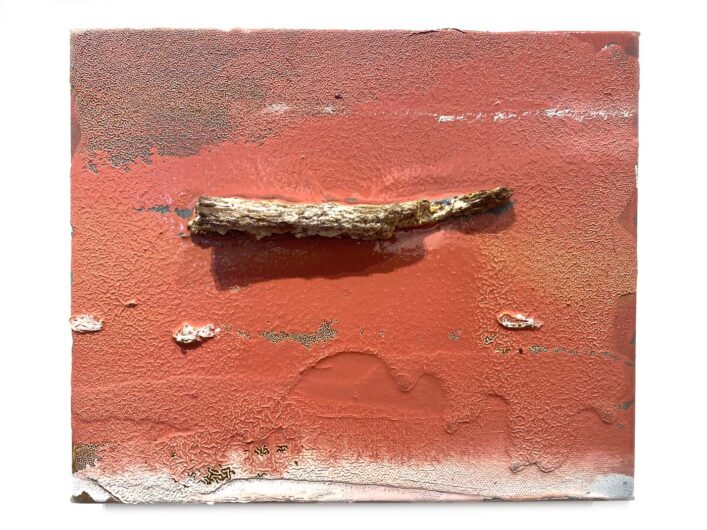
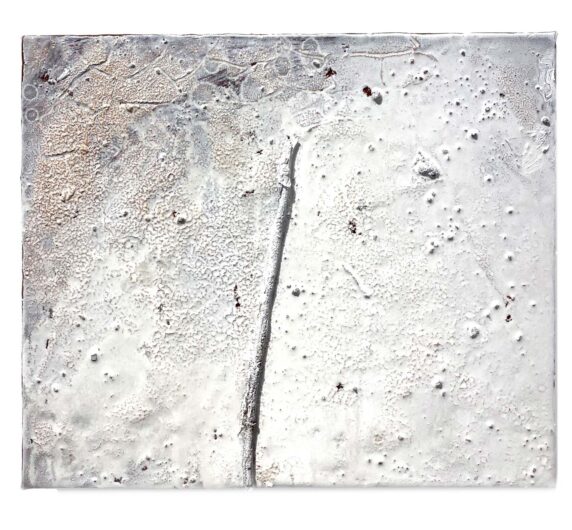
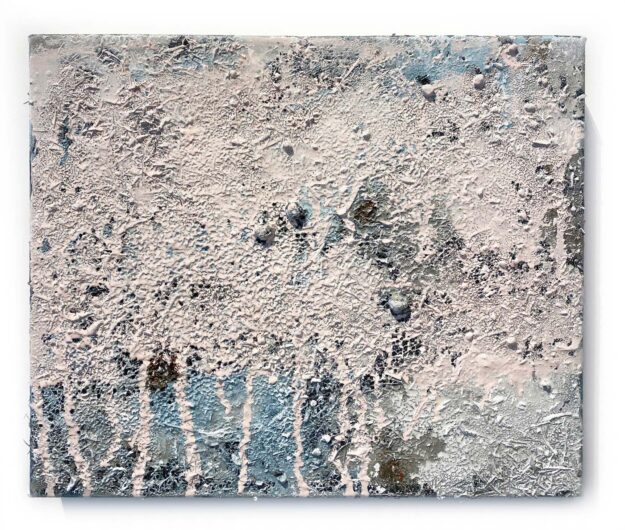
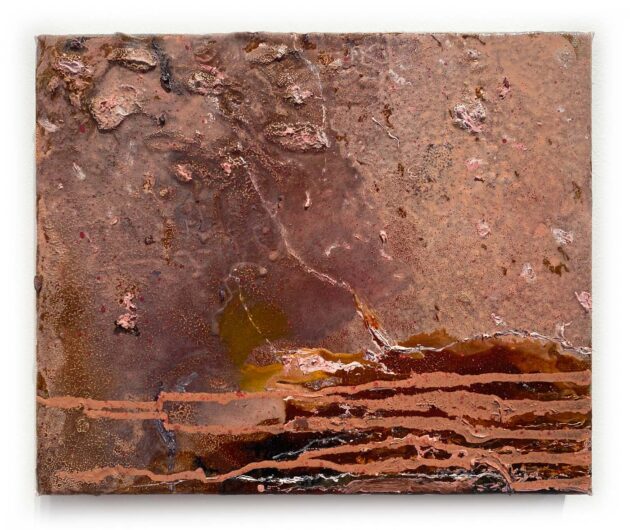
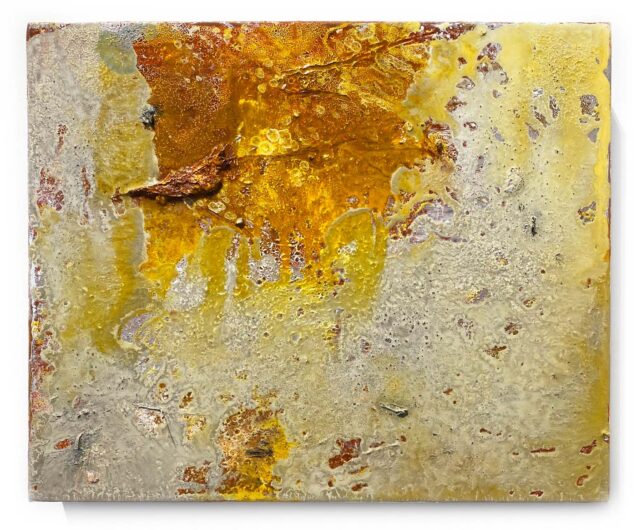
This new series of paintings continues an ongoing investigation into the Mallee and its ecological sustainability, viewed through the region’s boinkas (saltpan or shallow groundwater depressions) that occasionally brim with salty water.
The boinkas are largely the result of remnant surfical salt crusting from an ancient inland sea, but more recent clearing of adapted indigenous flora, (Eucalyptus Dumosa, pines and casuarinas, heath, saltbush and spinifex), for dryland cropping and irrigated horticulture, have seen these ubiquitous environments undergo further stress. This high salinity combined with algae and halo bacteria produces pink or red carotenoids giving the lake its pink colour.
In this series of works, the earth’s skin and biota reveal the cycles of inscribed human impact in conjunction with the scars inflicted by the forces of nature itself. All references to life sustaining water, however oblique, are gone and the primal mud has turned to environmental and apocalyptic sludge.
Categorised in: All works, In footer
This post was written by Alex Fettling